

Würth Collection
General Information
The Würth Collection
The Würth Collection comprises more than 20,000 works spanning the period from the Middle Ages to the present, with a primary focus on painting and sculpture. In parallel to his successful business, the entrepreneur Reinhold Würth built the collection over several decades. The collection centres on modern and contemporary art, featuring works by Pablo Picasso, Max Beckmann, Ernst Ludwig Kirchner, Emil Nolde, and Gabriele Münter, as well as Hans Arp and Max Bill, and extending to Anselm Kiefer, Georg Baselitz and David Hockney.
Art and Culture
at Würth
The inspiring co-existence of day-to-day business and the arts belong intrinsically to the Würth Group.
The family-owned enterprise has long been committed to social and cultural responsibility. Both the Würth Group and the charitable Würth Foundation promote a thriving cultural landscape and social cohesion.
Fifteen museums and art cabinets (exhibition spaces adjacent to Würth subsidiaries) operated by the Würth Group in Germany and across Europe showcase the richly varied Würth Collection. All venues are open to the public free of charge.
Würth’s multifaceted commitment also extends to literature. Since 1997, the Würth Prize for European Literature, awarded by the Würth Foundation, has honoured authors such as Herta Müller, Peter Handke, and Annie Ernaux. All three of them received the Nobelprize for Literature afterwards.
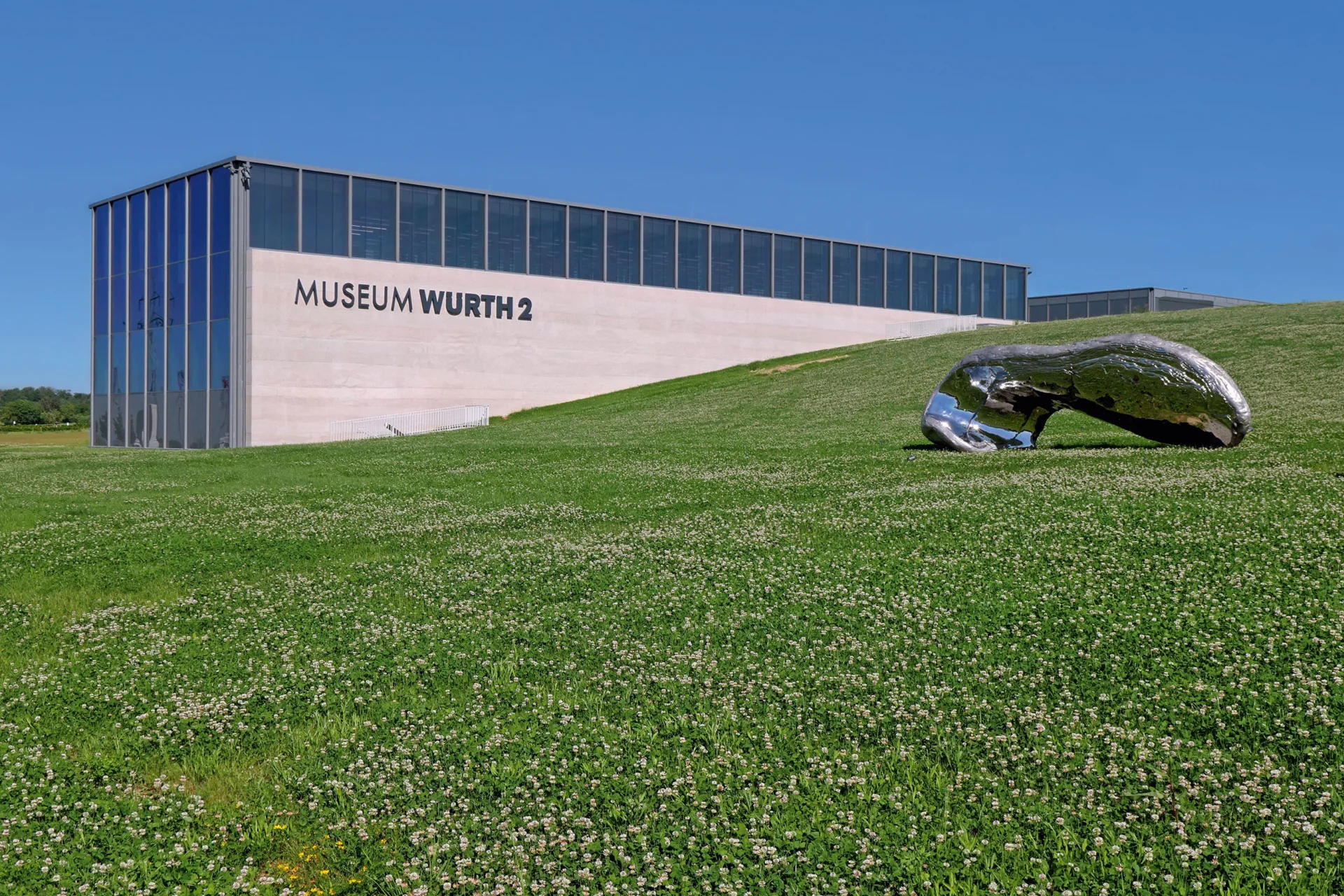
The establishment of the Würth Philharmonic Orchestra in 2017 as the resident ensemble of the Reinhold Würth Musikstiftung gGmbH laid the foundation for the Group’s commitment to classical music. The orchestra is based at the Carmen Würth Forum designed by David Chipperfield Architects at the site of the company headquarters in Künzelsau. The Forum complex also houses Museum Würth 2.