

Old Masters
Höhepunkte
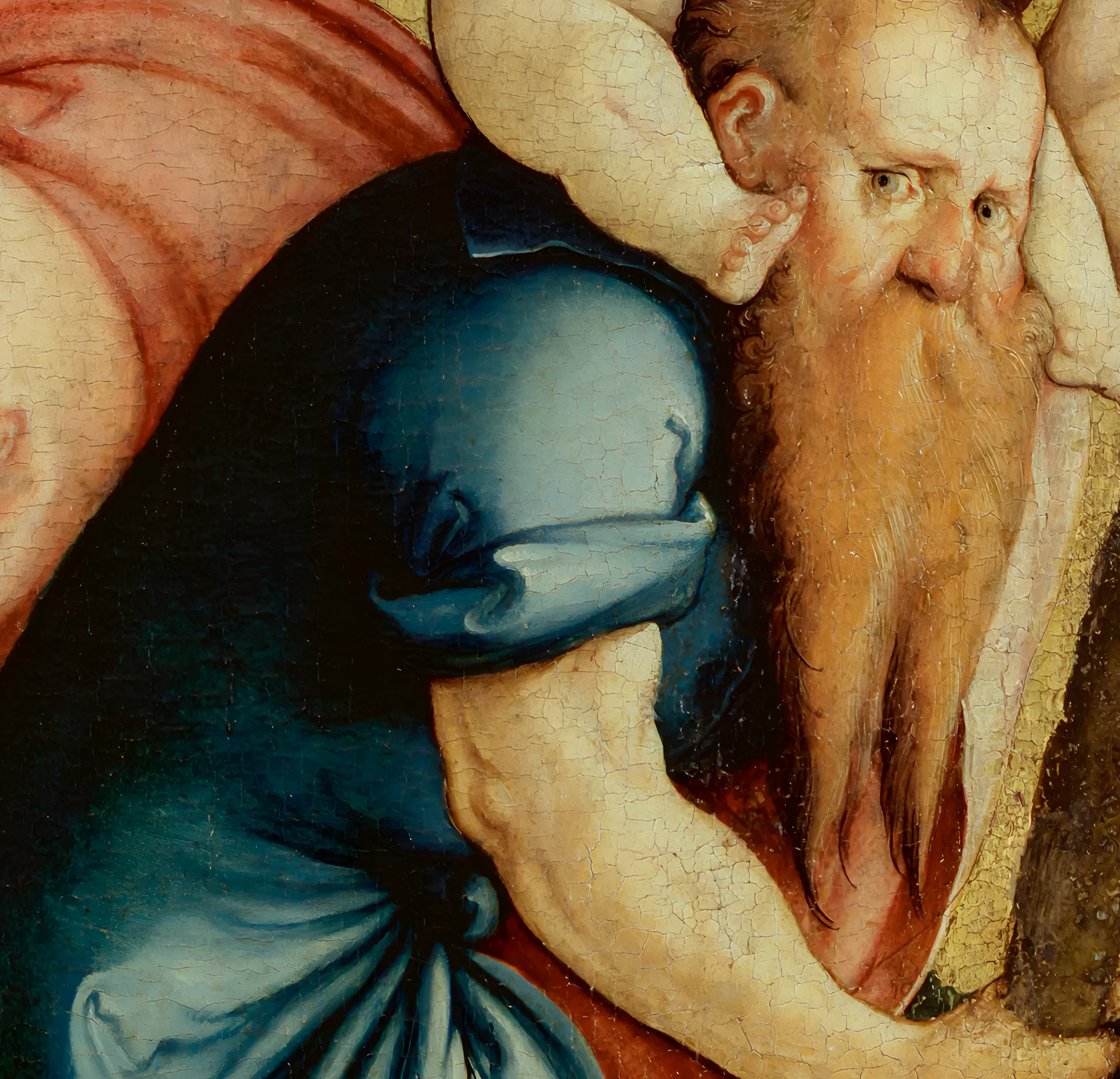
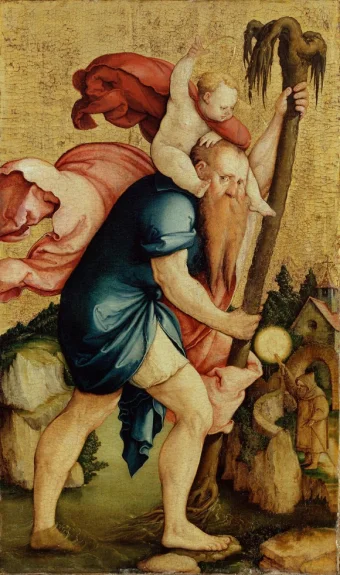
Master of Meßkirch, Falkenstein Altarpiece (Left Fixed Wing), Saint Christopher, Würth Collection, Inv. 15605/1, Photo: Volker Naumann, Schönaich
Hans Holbein d. J.
Madonna of Mayor
Jacob Meyer zum Hasen,
1525/26 and 1528
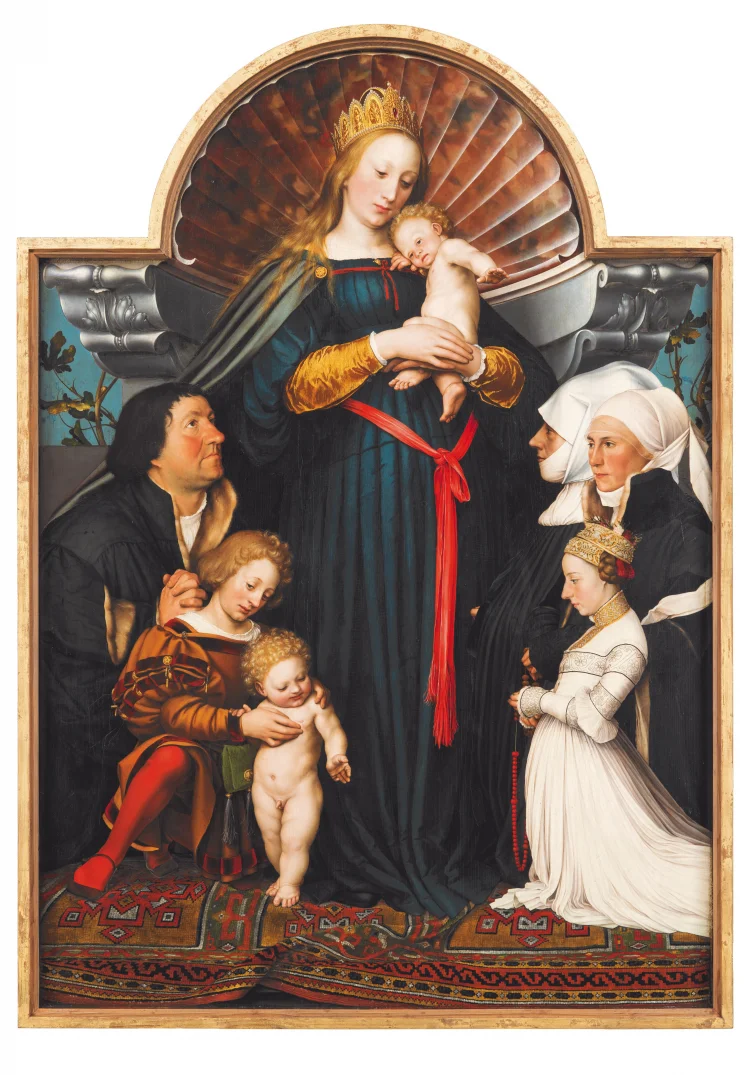
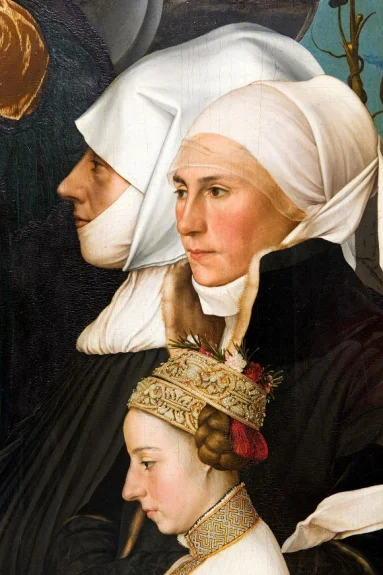
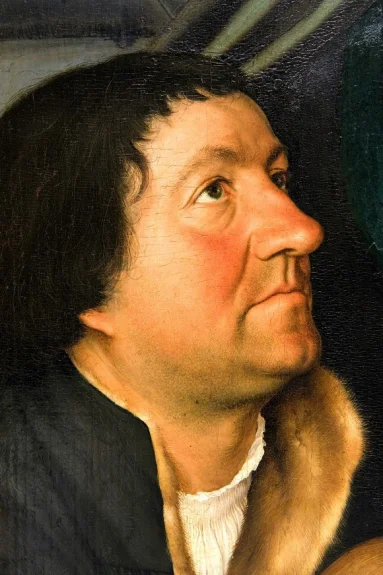
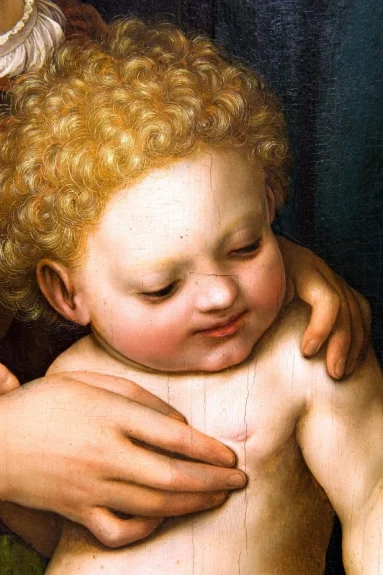
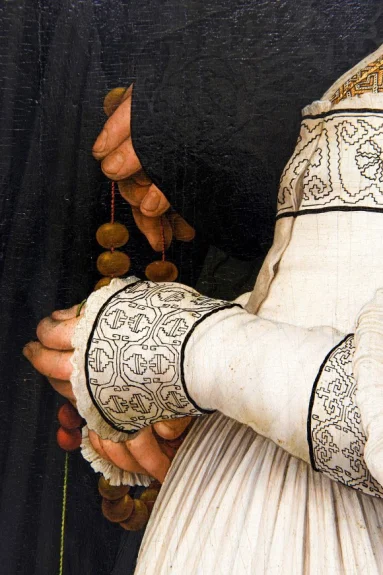
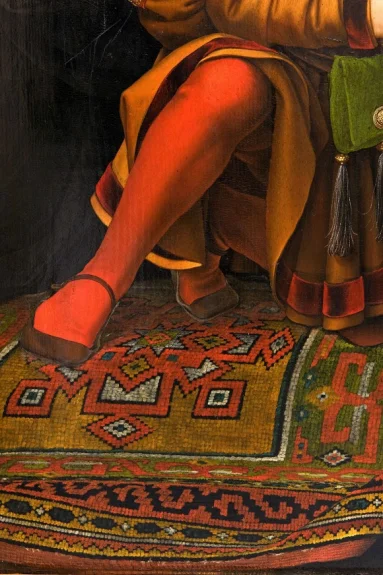
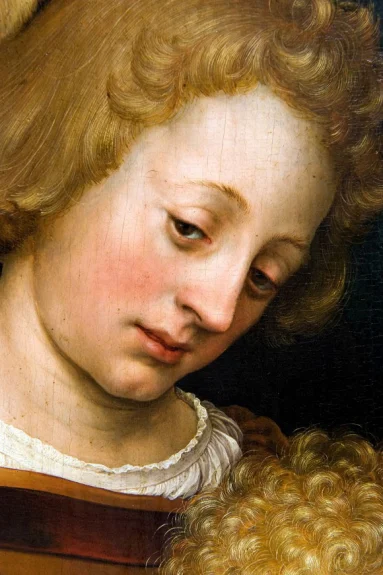
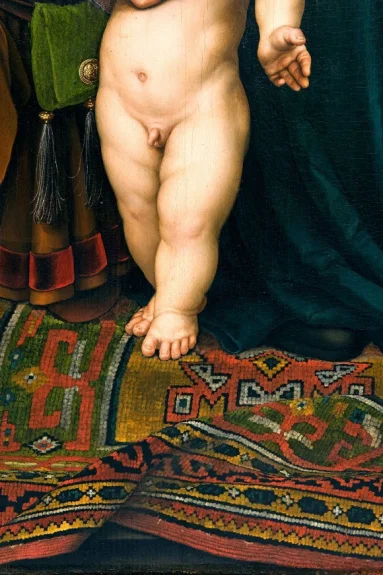
Hans Holbein the Younger, Madonna of Mayor Jacob Meyer zum Hasen, 1525/26 and 1528, Würth Collection, Inv. 14910, Photo: Philipp Schönborn
Around 500 years ago, Hans Holbein the Younger (b. 1497/98, Augsburg; d. 1543, London) created »Madonna of Mayor Jacob Meyer zum Hasen« in Basel. This panel painting, often compared to Raphael’s Sistine Madonna, owes its international reputation equally to the complex history of its genesis, to Holbein’s ingenious pictorial inventiveness, and to the work’s highly unusual later fate.
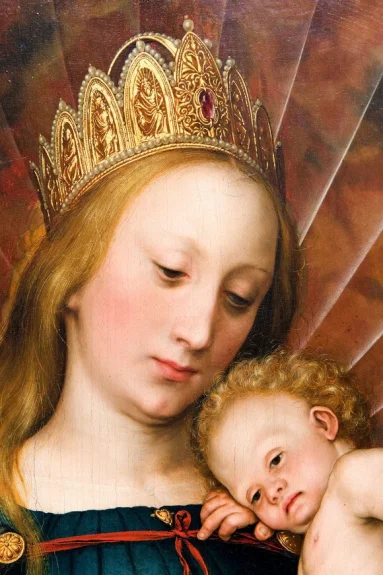
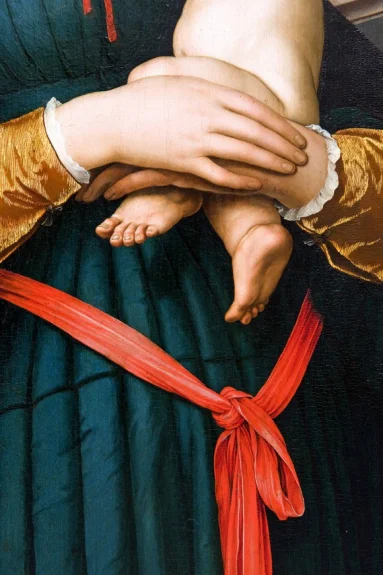
The panel painting, rounded off at the top by an arc, shows the crowned Mother of God with the Christ Child on her arm not only as the Queen of Heaven, but also as the so-called »Virgin of Mercy« (German »Schutzmantelmadonna«, literally Madonna of the Protective Mantle). Her widely opened cloak shelters the kneeling figures gathered at her feet.
The acquisition by the entrepreneur and collector Reinhold Würth forms a link of the highest quality between the collection’s holdings of Old Masters and the modern era. The Virgin of Mercy is considered to be one of the world’s most important and beautiful Old Master paintings, and its creator one of the most outstanding artists of the 16th century.
Hubert Gerhard
Madonna with Child, 1600/02
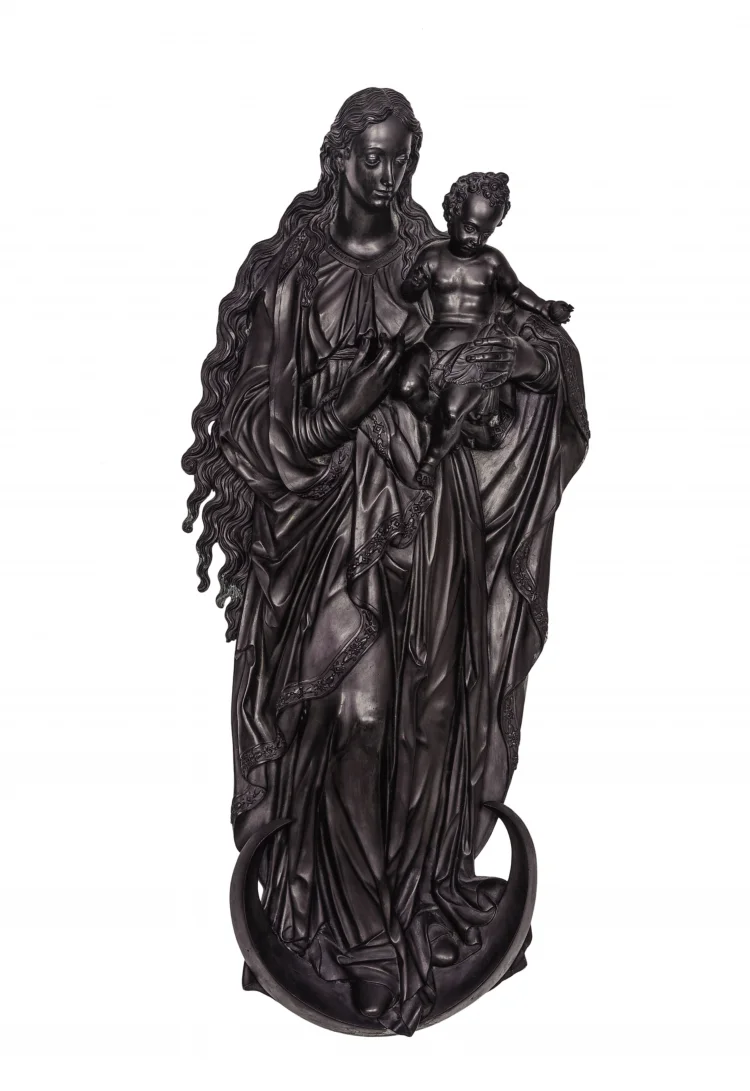
Hubert Gerhard, Madonna with Child, 1600/1602, Würth Collection, Inv. 20911
Hubert Gerhard (b. 1540/50, ’s-Hertogenbosch; d. 1620, Munich), the Netherlandish creator of early Baroque bronzes, is regarded as one of the key figures disseminating the Italianate artistic expression north of the Alps. His training on Florentine models, particularly in the workshop of Giambologna, is evident in the elegance of his elongated figures in the Mannerist style. Gerhard’s creative interpretations set new standards for sculpture in southern Germany. He worked for the Fugger family in Augsburg and served actively as court sculptor in Munich and in Innsbruck. His reputation was such that even Emperor Rudolf II failed in his efforts to bring this exceptional artist to his court in Prague.
The arrival of the Madonna Standing on a Crescent Moon in the Johanniterkirche in Schwäbisch Hall meant the return close to its place of origin of one of the most important Marian representations in bronze sculpture. The »great Marian image, with the Child upon her arm and a sceptre in her hand« was originally created for the castle chapel of the residence of Emperor Rudolf II’s brother, Archduke Maximilian III of Austria, in Bad Mergentheim, where the Archduke served as Grand Master of the Teutonic Order.
Standing with both feet on a crescent moon, Mary is identified – even without a crown – as ruler over all the celestial spheres. While the Christ Child, with luxuriantly curled hair like his mother, holds a globe in his left hand and raises his right with two fingers extended in a blessing, the crescent moon, symbol of inconstancy and evil, is trodden underfoot by Mary.
Master of Meßkirch
Falkenstein Altarpiece, 1530
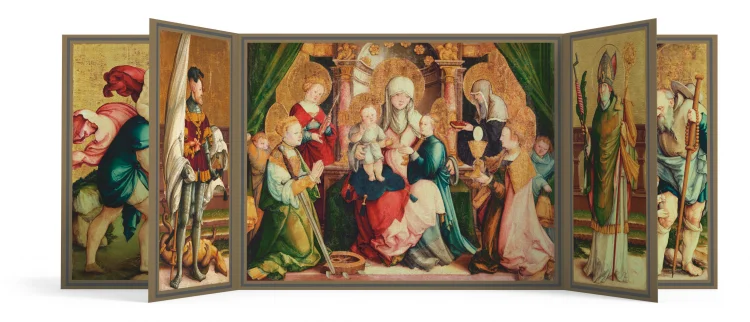
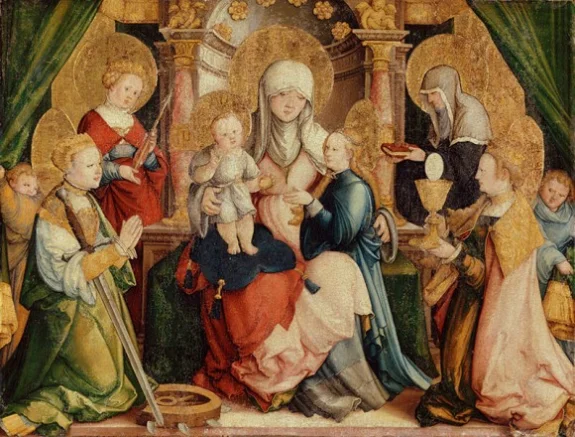
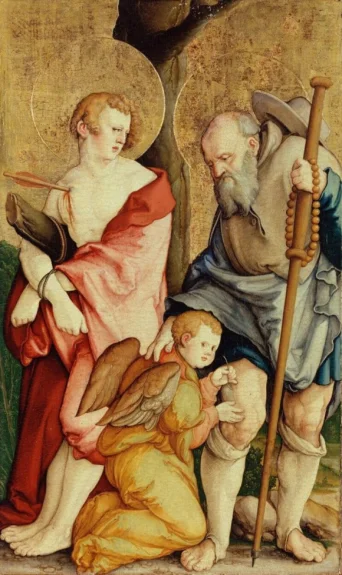
The »Falkenstein Altarpiece« was created after 1530 for Falkenstein Castle, belonging to the Barons of Zimmern. Devised with hinged wings, allowing for the display sides to be changed, the altarpiece’s broad central panel was flanked on either side by two wings. The two outer panels were fixed to the central panel and were slightly wider than the inner hinged wings, which were painted on both sides. On feast days, when the inner ‘hinged wings’ were opened, they concealed the fixed outer panels and so revealed the central panel. When closed, they concealed it.
Although dismantled into individual components and split into front and reverse panels in the 19th century, the most important elements of the altarpiece have survived in seven panels. We are grateful to the Staatsgalerie Stuttgart for the generous permanent loan of the two left hinged wing panels, which it has owned since 1929.

Erbschenken Cup of the Count of Limpurg
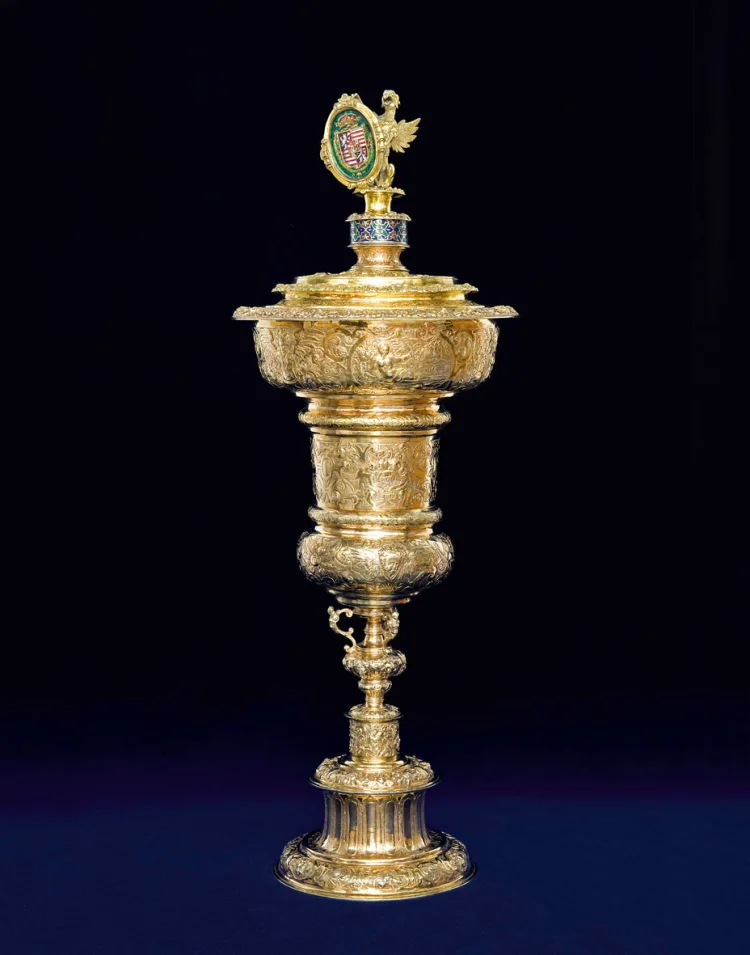
Its size, elaborate craftsmanship, and historical significance make the Hereditary Cupbearer Cup an exceptional work of art. In 1562, Christoph III of Limpurg-Gaildorf, Hereditary Cupbearer of the Holy Roman Empire, presented the cup to Maximilian II (1527–1576), King of Bohemia and Archduke of Austria, on the occasion of the latter’s coronation as King of Germany in Frankfurt. It was tradition that the cupbearer safeguarded the cup, and it was therefore brought to Schwäbisch Hall, where the Counts of Limpurg resided.
Preserved there, it became a classic object in a so-called »Kunstkammer«, or cabinet of curiosities of the kind found frequently at princely courts in 16th and 17th century Europe. These collections were conceived as mirrors of the cosmos and repositories of the rapidly expanding knowledge of the world. As a result, they comprised nearly everything deemed important in their time: gold and silver, books from every branch of learning, astronomical devices, richly decorated tankards, finely turned ivory pieces and many other objects. Such works of art also rank among the most remarkable treasures in the Würth Collection.
The Würth Collection’s Hereditary Cupbearer Cup is believed to be the only surviving goblet verifiably used at the coronation of a king, thus making it a historical document of the utmost significance.