

Johanniterkirche
History of the Building
13th century
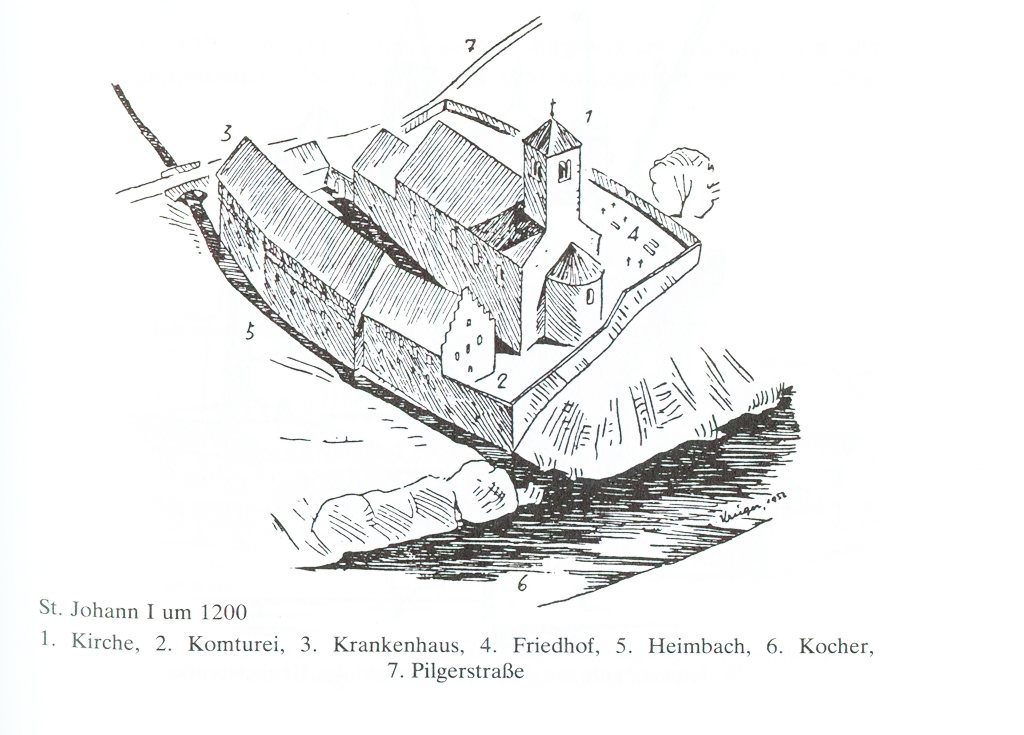
Re-foundation of the Schwäbisch Hall hospital church
The Knights of Saint John took on the administration of the municipal hospital
First documented mention of the church
14th century
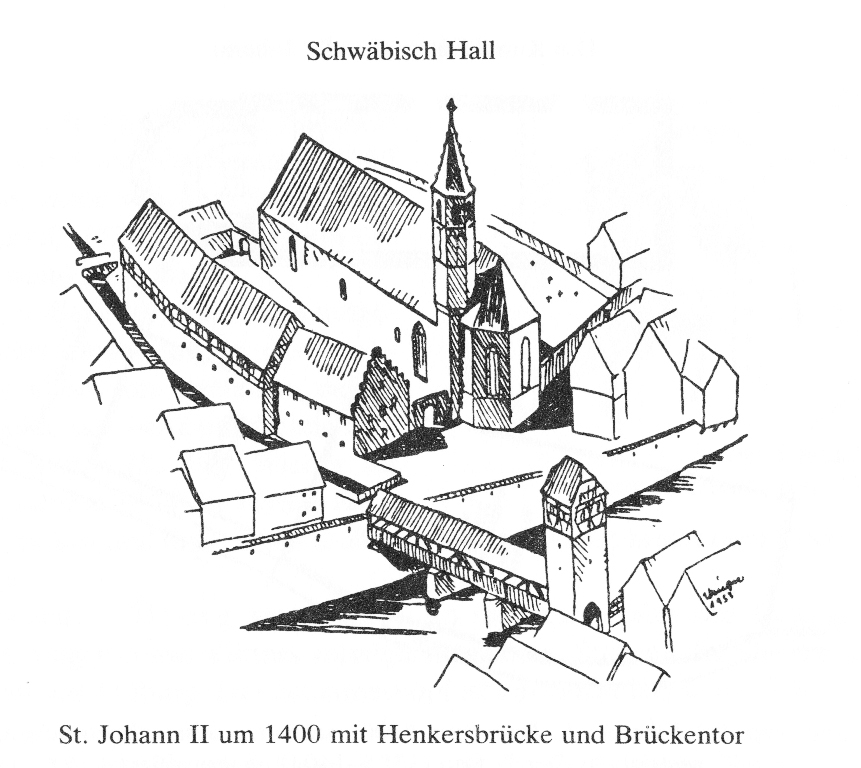
The Knights Hospitaller returned the hospital to the municipal authorities; St. John’s Church became a filial church of St. George’s in Gottwollshausen
Re-consecration of the church
Dendrochronological date of the chancel roof structure
Fig Johanniterkirche c. 1400
15th century
Dendrochronological date of the nave roof structure
Consecration of the extension of the Johanniterkirche
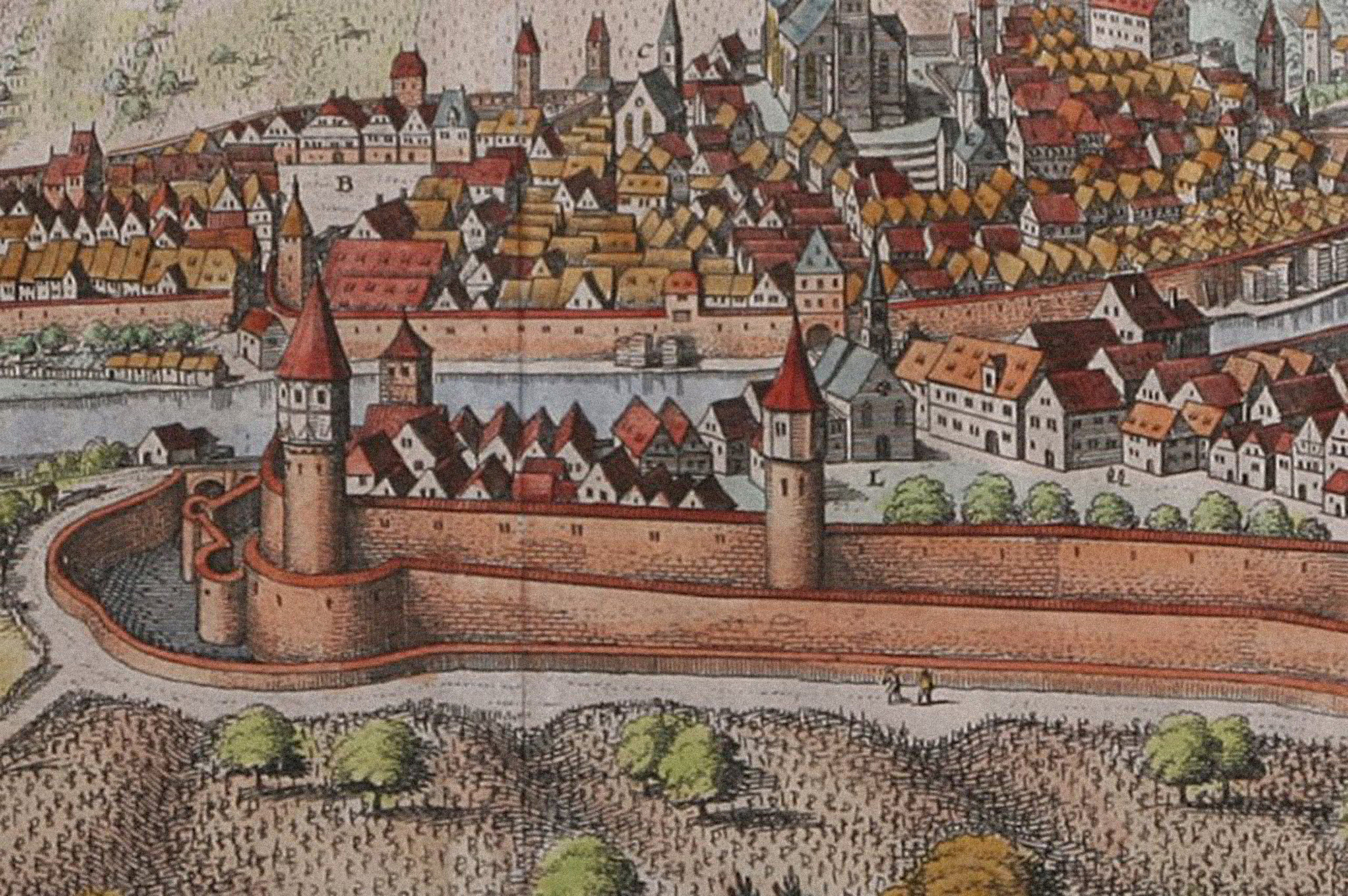
Dendrochronological date of the timber in the bell tower
16th century
Catholic mass ceased to be held in the church
19th century
Secularisation: The parish was abolished through royal decree by King Frederick I of Württemberg on 21 February 1812
Sold to the municipality
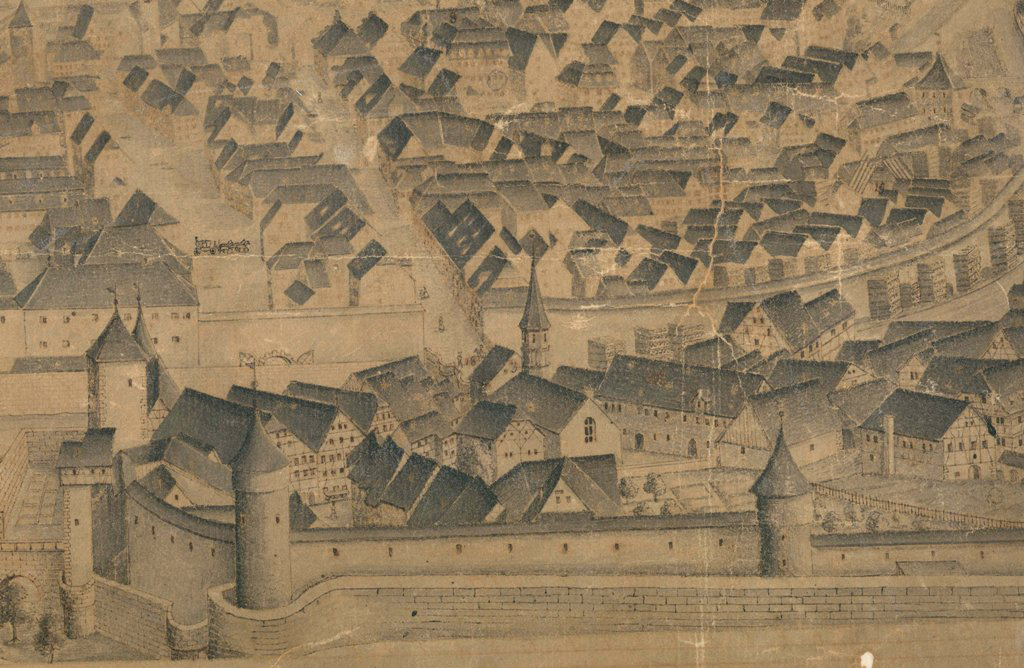
The Johanniterkirche was purchased by the town from the Royal Foundation Administration on 17 August 1816 for the sum of 2,300 guilders. The plan was to convert the church for use as »a food supply store during military campaigns«.
Gymnasium hall
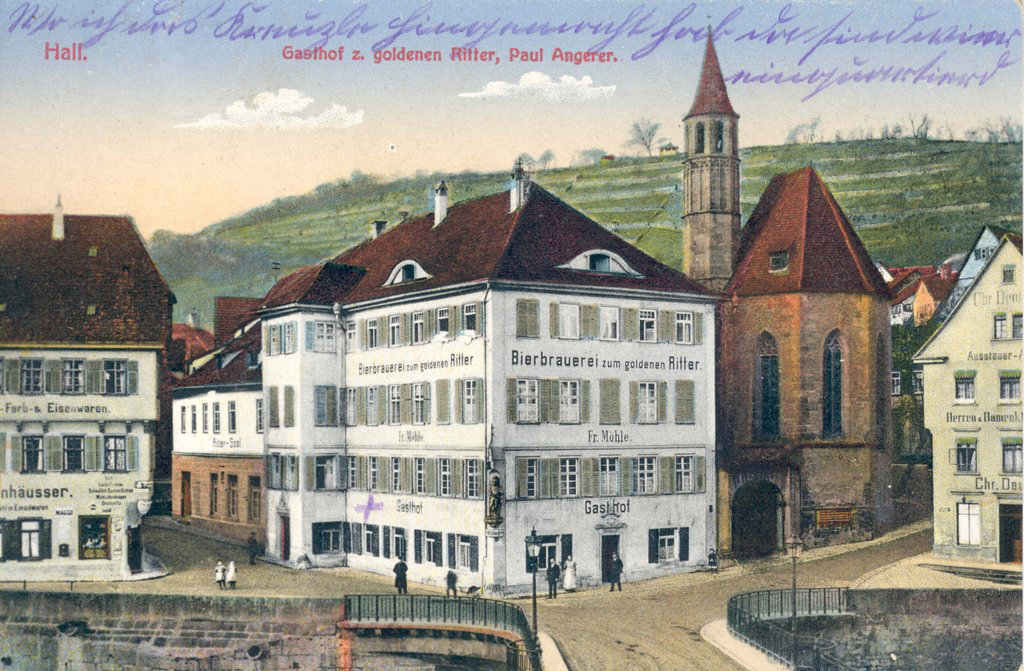
»The lease holders of the Weilerkirche (Johanniterkirche) were asked to vacate the building, as it was intended to house a new gymnasium there …«
20th century
Addition constructed for the gymnasium instructor
Already in 1921, an extension for the gymnasium instructor was planned on the north side between the chancel and the nave; construction was delayed until after inflation.
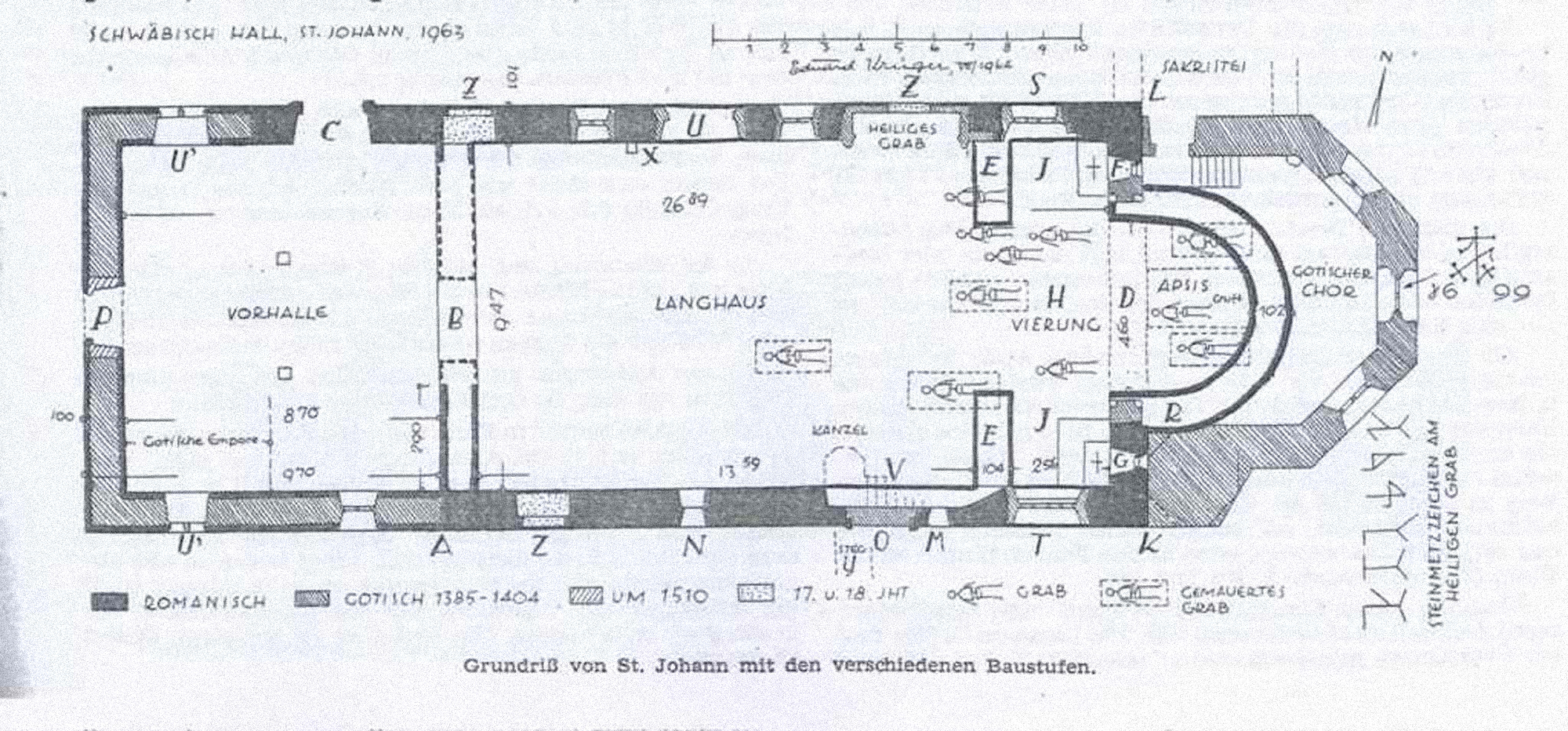
Construction work and archaeological excavations
Installation of the wooden gallery
Event and exhibition space, occasionally still used as a gymnasium and table tennis hall
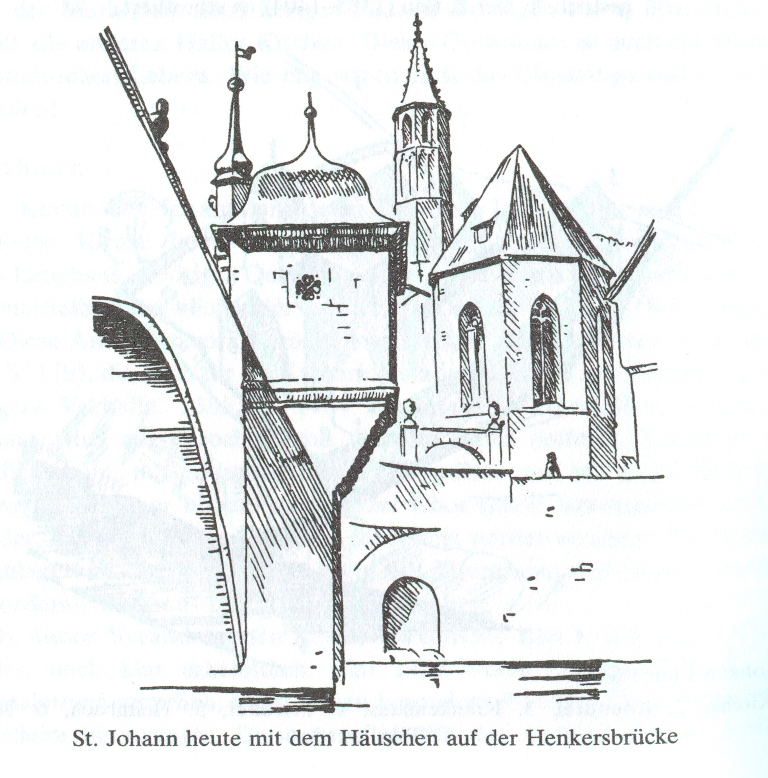
Renovation of the spire
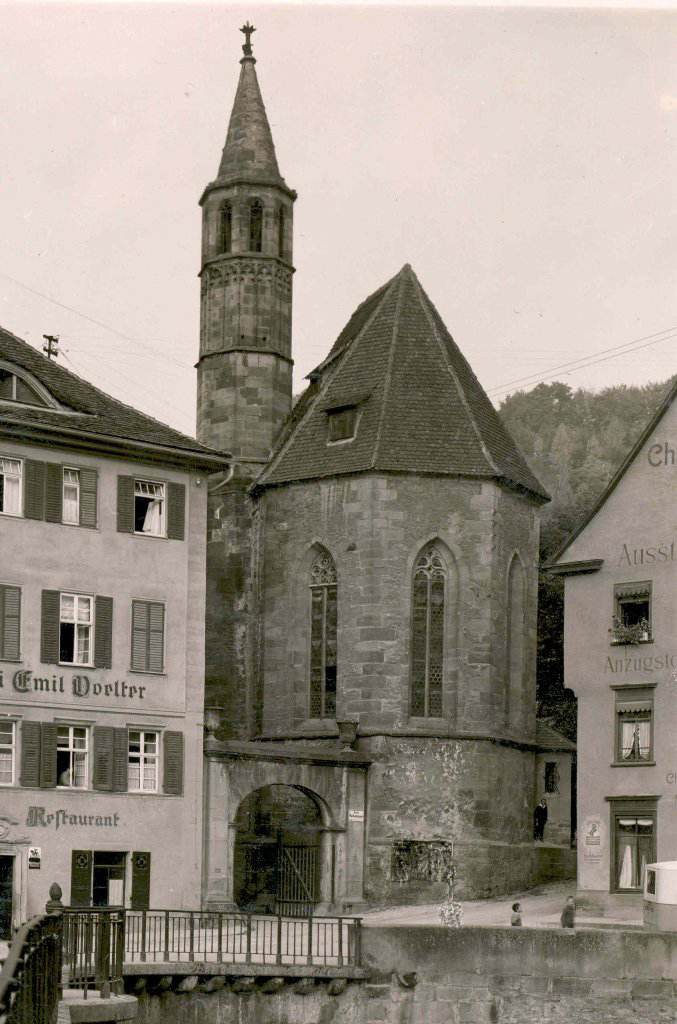
Information according to Stadtarchiv SHA 35/2744: Sandstone spire removed in October 1955 due to structural instability; not replaced until May 1961. The spire was originally intended to be made of copper, but according to records, it was executed in stone by the Ludwigsburg sculptor Unkauf (see Krüger, Johanniter-Orden Baugeschichte, p. 8). According to building department records on file, the concrete version of the spire dates from 1961. The spire was repaired in 1968 after being struck by lightning.
Used as a rehearsal space for the Schwäbisch Hall open-air theatre festival as well as by other cultural event organisers.
21th century
First presentation of »Anthony Caro. The Last Judgement Sculpture«, with further exhibitions of works from the Würth Collection to follow (Jutta Bosch and Nativity scenes)
Further tower restoration (June)
Sculptor Franz Raßl from Gerabronn completed sculptures for the gargoyles.
Sold to Adolf Würth GmbH & Co. KG for permanent cultural use
Conversion and extension for use as a museum space for the Würth Collection’s Old Masters
Reopening of the Johanniterhalle following full restoration funded by the Würth Group, 21 Nov 2008
The installation of Hans Holbein the Younger’s »The Madonna of the Lord Mayor Jacob Meyer zum Hasen« prompted the renaming of the building, from Johanniterhalle back to Johanniterkirche.
Full Restoration
to a Museum Building
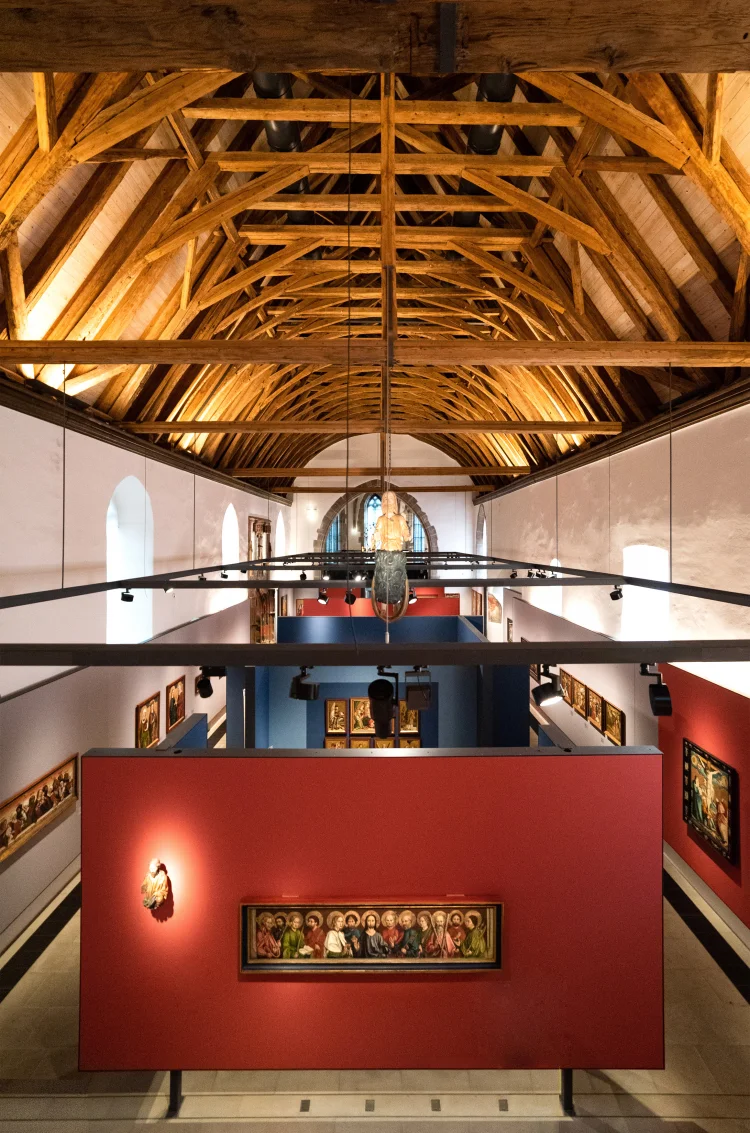
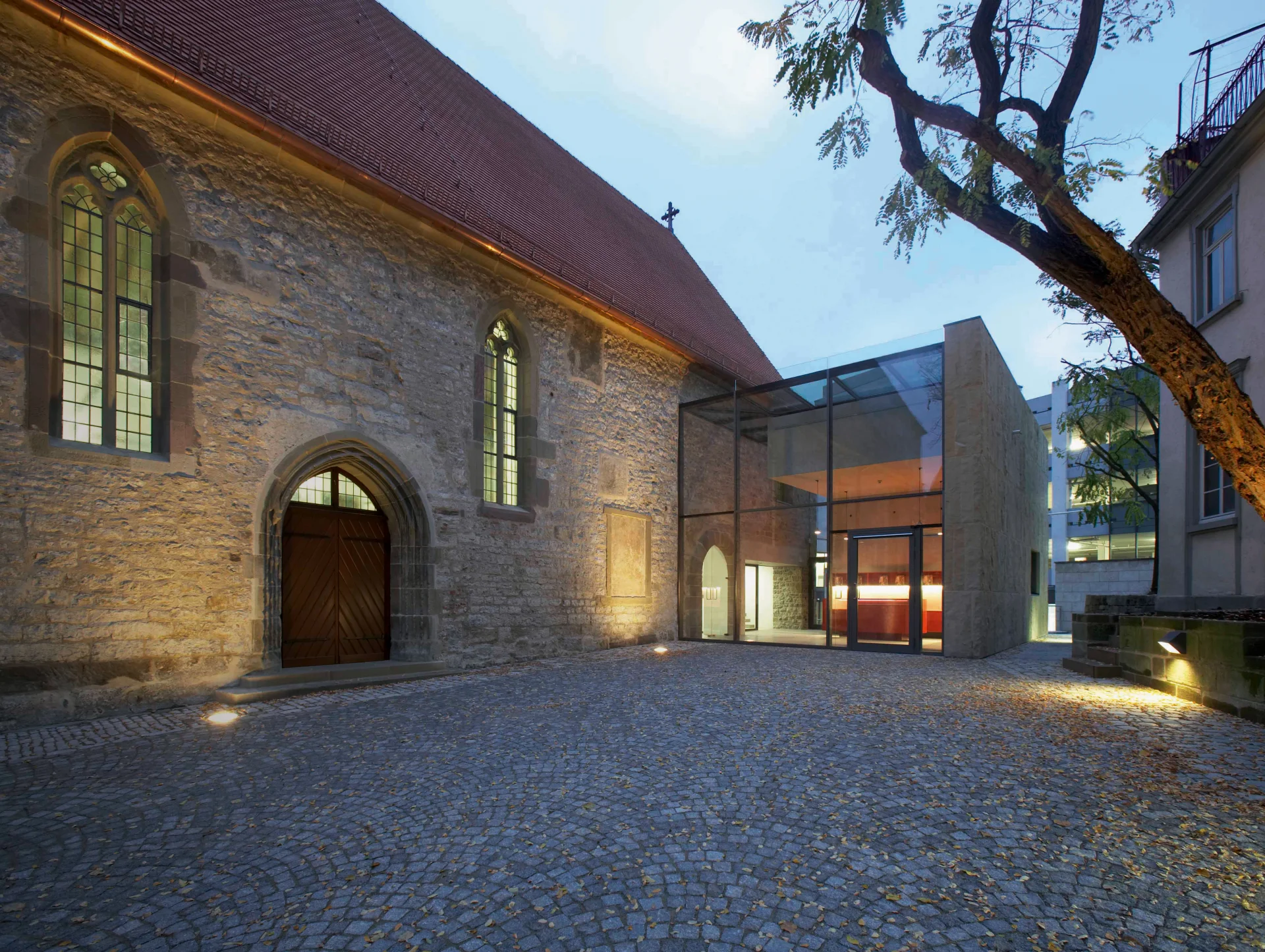
The complete restoration, funded over several years by Adolf Würth GmbH & Co. KG, included installation of state-of-the-art building services, security, and climate-control systems in accordance with museum standards, as well as restoration of the original Gothic roof structure, dating from 1400/1401 and proven to be one of the oldest of its kind in southern Germany. Unsuitable structural additions resulting from the church hall’s varied secular uses were removed; decorative elements and the impressive roof structure were laid free and cleaned; the natural stone facade was restored; and conservation measures were undertaken on the chancel’s ribbed vaults and tracery window jambs.
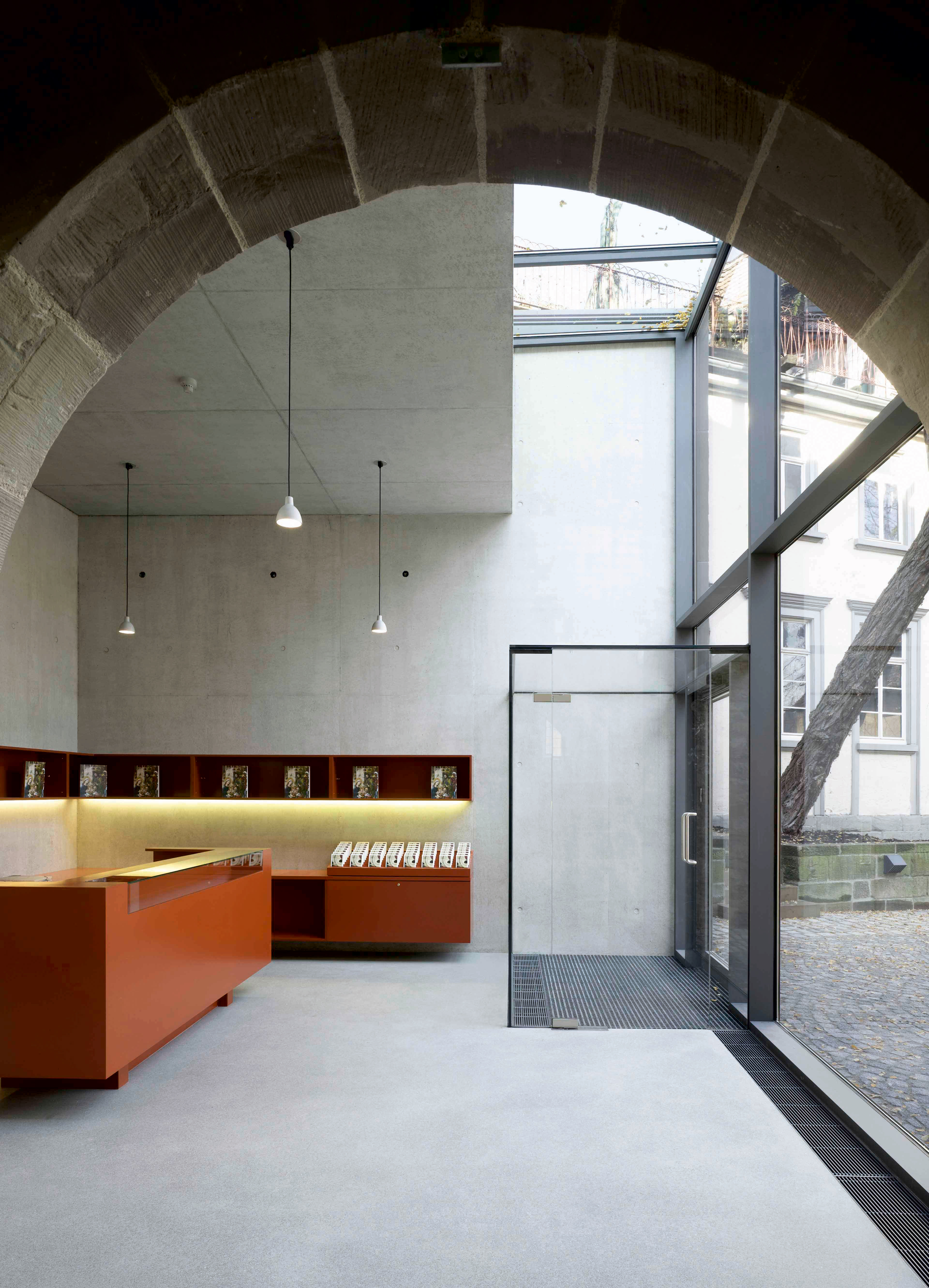
The Johanniterkirche was thus once again restored to enable people to experience its unique original form, quality, and beauty. Restoration was complemented by the construction of a new basement beneath the churchyard and a modern annex of glass and steel, partially clad in regional sandstone. This annex encloses the churchyard on the north side and accommodates the infrastructure necessary for museum operations.